






The Absence of Specie
and the Rise of the Valuables Economy
When the Last Legion forced the refugees to leave their valuables at the Claustrine pass, they did so with two very pragmatic goals in mind: one, because they needed the materials, plain and simple, for repairs and quick production of arms and armor. And two, because they knew that, in the lawless rule of the new lands, wealth had little practical use and would only serve as fuel for violence. But the arrival of the Dweghom host and the subsequent cooperation with the Last Legion drastically reduced the need for raw materials. Thus, a great vault was built, housing the amassed wealth of an entire civilization fleeing: the Sealed Temple. Then, when the namesake Order was formed, its goal was to use this wealth for the betterment of humanity.
When the Orders eventually joined the settlers at the Bounty’s shores, they regulated the violent clashes of different refugee groups, ratified the rule of de facto leaders that were willing to focus on peace and building a new life, and overall allowed society to focus on reclaiming what was lost, rather than kill each other for supremacy or resources. It is often said that this was because of their unmatched military prowess and the absolute superiority of their equipment. This is undoubtedly true; but not the whole truth. it soon became abundantly clear that only the Orders were holding the gold and silver keys to building a new future. The Orders decided to offer those keys meagerly.
The effects of this policy are known as the Absence of Specie.
While it cannot be denied that the Sealed Temple was paramount in reclaiming much of the lost knowledge of the past, this advancement was selective and steered. For every enterprise funded by the Sealed Temple, there was another—whether a mining expedition, a promising alchemical research, or a metallurgical initiative—that was ignored or even actively muzzled, if it could threaten the absolute control of the Orders over valuable metals. For every Queen and King that welcomed the Orders in their courts, there was another that was replaced and the Sealed Temple began loaning pure gold and silver to rulers to justify the basis of an economy in their realms.
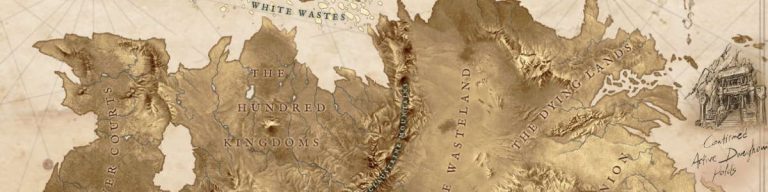
Thus, for centuries, the flow of gold and silver passed almost exclusively though the Orders’ filter and that meant that the rest of the world was starving in its absence. This artificial scarcity of gold and silver, especially in ingot and bullion form that can be used to mint coins, caused by the Orders’ muzzling control over their hoarded treasure, is what is summarily known as the Absence of Specie. It defined most of the history of the Hundred Kingdoms and has been the single, most influential factor over the continent’s economy at large. It was the reason that so many pioneers rushed to escape the clutches of the Orders, seeking to settle further from the Shores as soon as the Long Winter allowed. It was instrumental in the people’s perception of the Orders leading to the Red Years, as well as the greatest factor in why the nobility turned against the Orders on multiple occasions—they were, after all, their greatest debtors. It was, also, the most effective way of supporting Charles Armatellum, and their agreement to supply Perrin with silver and gold for the founding of an Imperial Mint defined the overwhelming speed in which the Empire expanded. The Emperor’s Mint became the first and only alternative to borrowing money for the nobility and, in fact, the Emperor was able to clear the depts of all sovereigns that bent the knee, since the only legal currency in the Empire came from the Mint. The Absence of Specie is also why no one dared openly march into Argem during the Dissolution and why the Chamberlain’s Office, to this day, hold much more sway than most nobles care to admit.
But all this is grand-scale history and economics, and such finances rarely represent the practical realities of most people. From early on, as the population grew and the Kingdoms expanded, new, subtler balances were invented and the everyday economy had to adapt, as the Sealed Temple refused to open the valve of gold and silver.
The first method for bypassing the effects of the Absence was, perhaps, the simplest: bartering. Deprived of valuable materials and standardized minted coins, the provision of goods and services had to be compensated with something. That something became anything. As long as both parties agreed to an exchange, this was legal and accepted.
A second method to escape the Absence’s strangle was made by turning to different materials to fuel a realms’ internal economy. Of the various attempts, such as iron, tin or even amber, copper was the only currency that endured, and its use spread. Ignored by the Last Legion, who preferred bronze and iron for repairs and feared they did not have the luxury or time to make it under the circumstances, copper was much less rare and became the most commonly used coin, driving an everyday economy that would have collapsed under a bartering complexity.
On occasion, attempts were made to marry the two concepts, quantifying and regulating the relevant worth of goods and services in copper. Most such attempts did not survive for long, partly because the population understood the coins as just another method of barter, and partly because copper coins were easier to obtain and, therefore, manipulate and even forge. So, authorities turned to regulating the official forms of legal bartering agreements instead. This, of course, only applied to greater agreements and everyday exchanges were usually decided on the spot. Handshaking as a gesture can be traced to such ratification methods but, more importantly, its significance over the global economy never wavered. It simply expanded and evolved. Local laws recognized and had been operating under the bartering system for a long time. When the Empire was formed, most local rulers simply added the Imperial currency system to their economies. Their excuse was that the population was mistrustful and was used to the bartering system, supplemented by copper currency. The reality, however, was that it allowed them to pay their obligations (taxes, fees and tributes to the Imperial Throne) in material goods. Treasures, works of art and even curios or magical items and heirlooms became kingly gifts for a reason: it allowed local nobility to pay in goods and retain pure gold and silver, escaping, or at least moderating, the effects of the Absence on them and their houses. Thus, the population has historically dealt in copper, as kingdoms and cities deal in gold and silver, which only ever reaches the hands of the biggest traders and the most successful mercenaries. High society, on the other hand, has learned to covet and amass pure precious materials and instead sought to pay in treasures and other valuables.
The Empire and its Dissolution obviously muddled the water; but they did not truly stir things in a different direction. Silver began flowing, at first from the City States and then even from the Hanse Guild’s efforts in Mannheim. Silubaster slowly overshadowed gold as the most precious material in high economics. As the centuries passed, therefore, the Absence of Specie became less and less obvious but no less present. Its effects remain, largely because the economy has been forged around it. The flourish of grand city-kingdoms meant that different currencies were issued eventually, shyly but surely, with the Imperial Mint serving as a reference point and trusted evaluator of different coins. In fact, the continued existence of the Imperial Mint as a regulator of currencies ensured that the weird, high-value, para-economy of bartering treasures, arts and magical items did not only continue, but increased.
The Orders, of course, have made every attempt to be involved in this. Not only are their vaults filled with such treasures, both from the Old Dominion refugees and from various collaterals for loans, but they also have an almost constant flow of valuables pouring in from the Old Dominion; a less-known aspect of their dealings with the W’adrhŭn. The Orders are also one of the primary funders of expeditions seeking such treasures, and entering their Order’s Ledger of Explorers is a coveted method by men and women of fortune and thrill seekers to fund their misadventures.
In reality, however, things have largely escaped the control of the Orders to the point that this so-called Valuables Economy has slowly become somewhat of an rising enterprise, with individuals of means funding their own, private expeditions. While the practice possibly hides one’s attempts to ensure that the Absence would never threaten one, it has also become a matter of prestige and influence. Having the greatest treasures is proof that you have no need to trade it; and thus, you no longer rely on anyone’s coins but your own.