










Sire,
Our common acquaintances have fulfilled their end of the bargain and have delivered the majority of the cadavers we were so keenly interested in. In the interest of brevity and the fulfillment of our agreement, I have forgone waiting for the last sample, as I find the odds of securing one of them infinitesimal at best.
To address the main issue we both sought to parse: our assumptions were correct, the powers and physiology of the Orders are not consistent with human maxima. The main cause for this seems to be a foreign body present in all but one of the cadavers provided. Scarring above the location of these foreign bodies is consistent with a willful implantation of this metallic object. Width and length varied by subject, but all were small, no dimension exceeding an inch in length and less than half that in thickness. This was especially true for that object recovered from Subject #5, whose thickness did not exceed that of a well crafted needle. More troubling, each of these objects seems to have fused with the host and expanded along the main vascular and nevron system of each subject. These filaments display extreme toughness and flexibility, resisting all attempts at cutting with anything short of a full force swing of a heavy weapon. We are still not able to identify the material, though it displays several of the characteristics of silubaster. Expansion of these threads was not consistent with time since implantation, displaying significant variance through each individual.
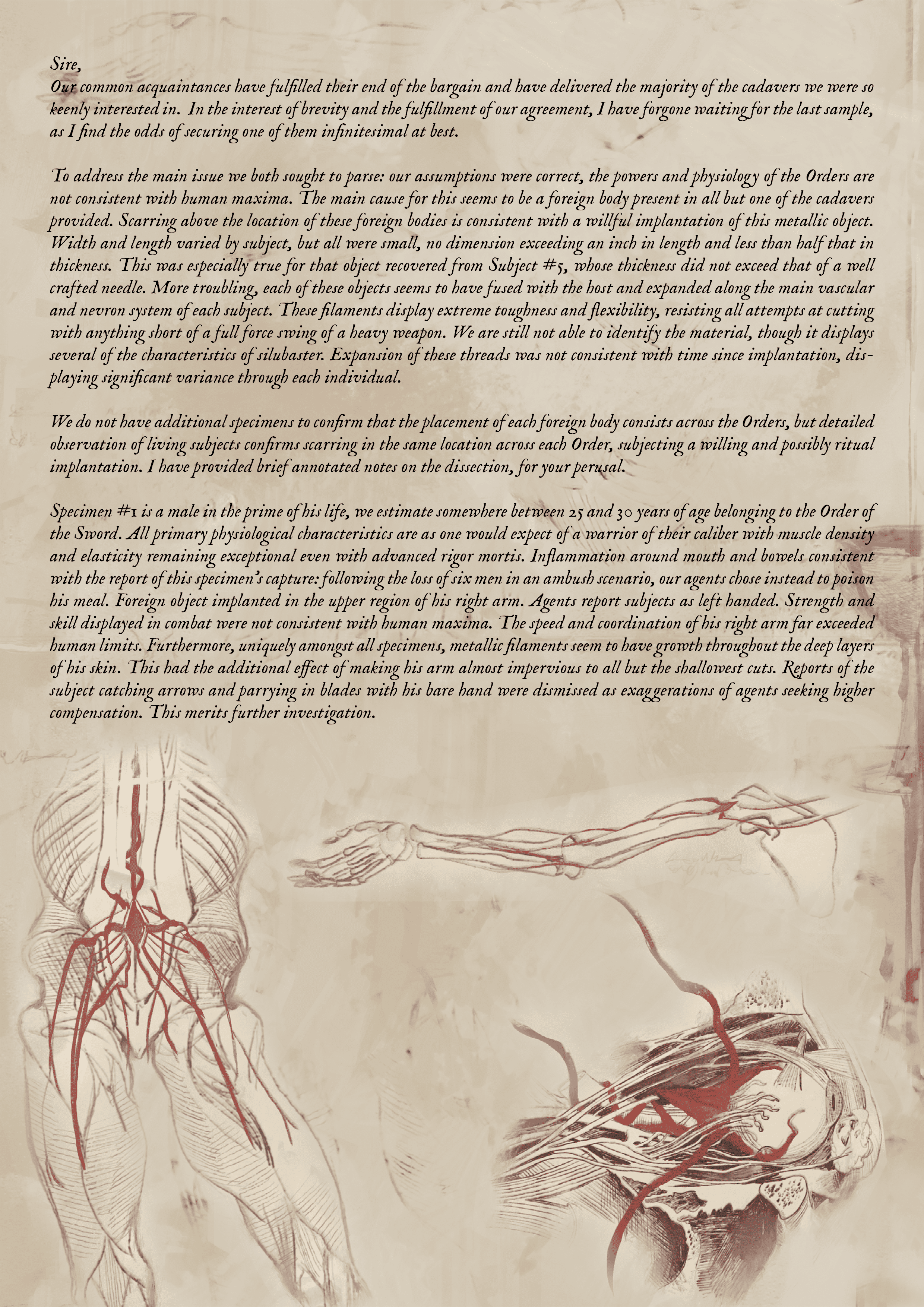
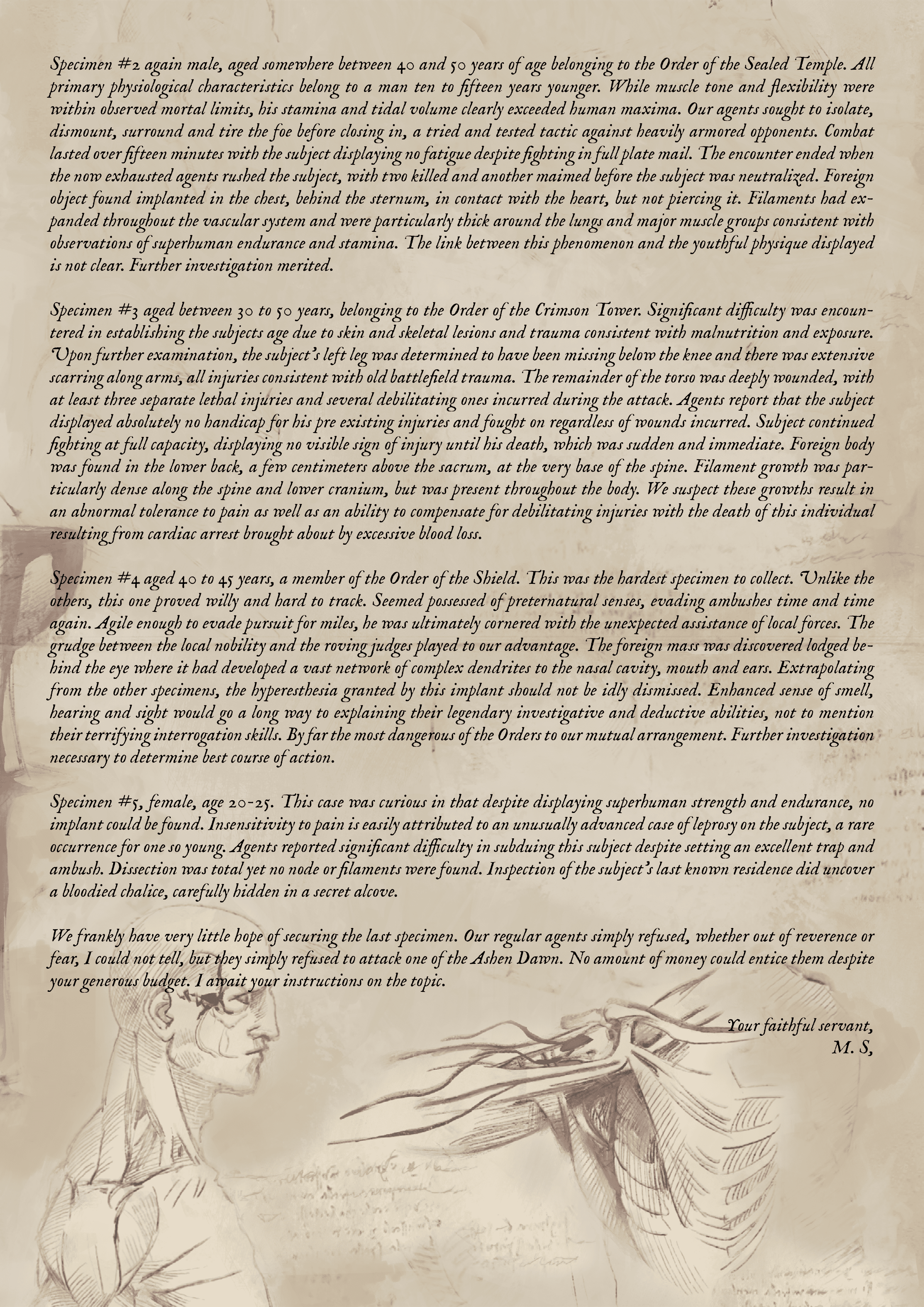
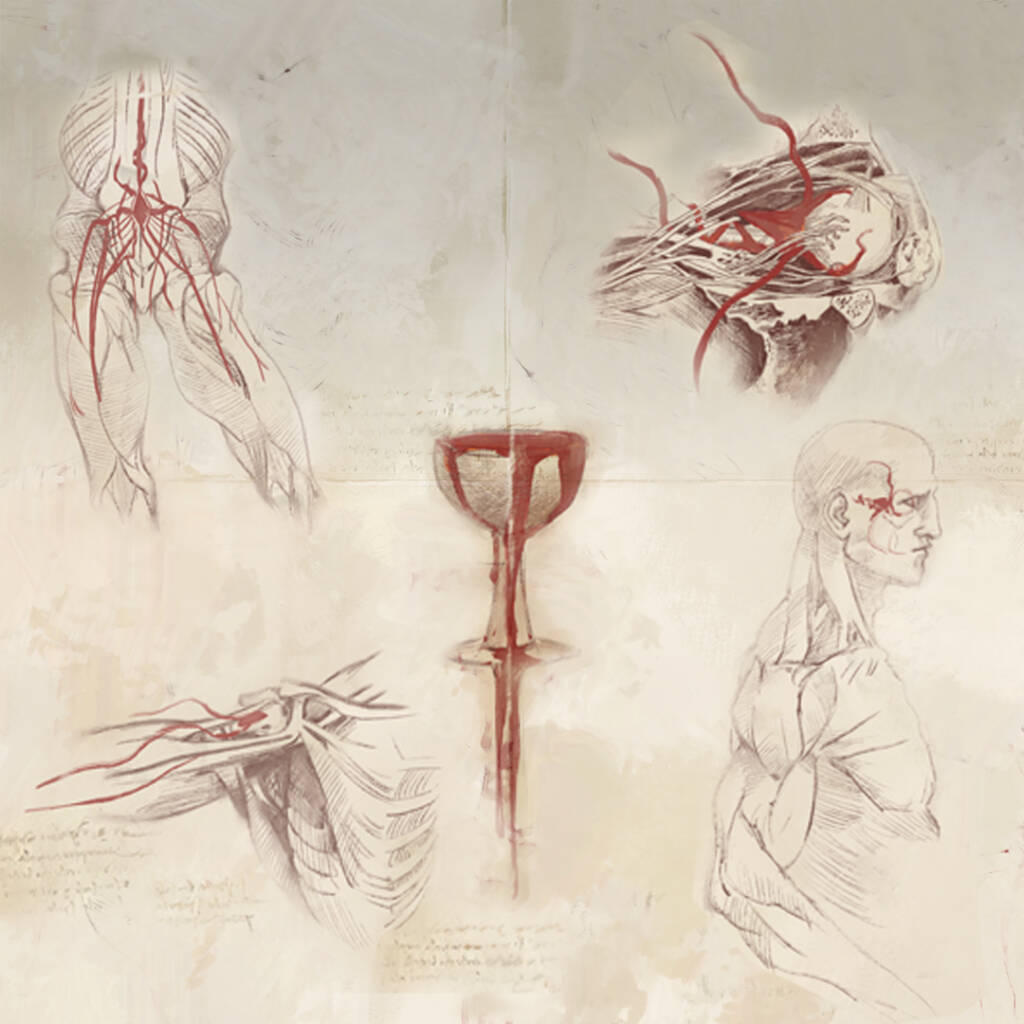
We do not have additional specimens to confirm that the placement of each foreign body is consistent across the Orders, but detailed observation of living subjects confirms scarring in the same location across each Order, suggesting a willing and possibly ritual implantation. I have provided brief annotated notes on the dissection, for your perusal.
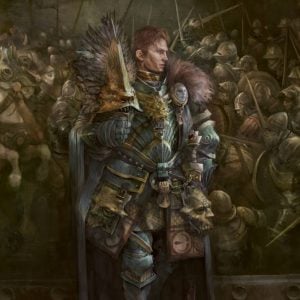
Specimen #1 is a male in the prime of his life, we estimate somewhere between 25 and 30 years of age belonging to the Order of the Sword. All primary physiological characteristics are as one would expect of a warrior of their caliber with muscle density and elasticity remaining exceptional even with advanced rigor mortis. Inflammation around mouth and bowels consistent with the report of this specimen’s capture: following the loss of six men in an ambush scenario, our agents chose instead to poison his meal. Foreign object implanted in the upper region of his right arm. Agents report subjects as left handed. Strength and skill displayed in combat were not consistent with human maxima. The speed and coordination of his right arm far exceeded human limits. Furthermore, uniquely amongst all specimens, metallic filaments seem to have growth throughout the deep layers of his skin. This had the additional effect of making his arm almost impervious to all but the shallowest cuts. Reports of the subject catching arrows and parrying in blades with his bare hand were dismissed as exaggerations of agents seeking higher compensation. This merits further investigation.
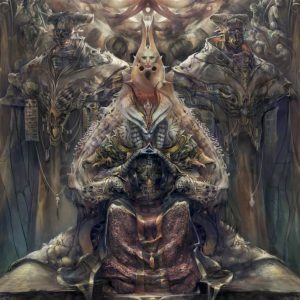
Specimen #2 again male, aged somewhere between 40 and 50 years of age belonging to the Order of the Sealed Temple. All primary physiological characteristics belong to a man ten to fifteen years younger. While muscle tone and flexibility were within observed mortal limits, his stamina and tidal volume clearly exceeded human maxima. Our agents sought to isolate, dismount, surround and tire the foe before closing in, a tried and tested tactic against heavily armored opponents. Combat lasted over fifteen minutes with the subject displaying no fatigue despite fighting in full plate mail. The encounter ended when the now exhausted agents rushed the subject, with two killed and another maimed before the subject was neutralized. Foreign object found implanted in the chest, behind the sternum, in contact with the heart, but not piercing it. Filaments had expanded throughout the vascular system and were particularly thick around the lungs and major muscle groups consistent with observations of superhuman endurance and stamina. The link between this phenomenon and the youthful physique displayed is not clear. Further investigation merited.
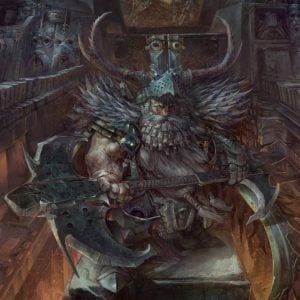
Specimen #3 aged between 30 to 50 years, belonging to the Order of the Crimson Tower. Significant difficulty was encountered in establishing the subjects age due to skin and skeletal lesions and trauma consistent with malnutrition and exposure. Upon further examination, the subject’s left leg was determined to have been missing below the knee and there was extensive scarring along arms, all injuries consistent with old battlefield trauma. The remainder of the torso was deeply wounded, with at least three separate lethal injuries and several debilitating ones incurred during the attack. Agents report that the subject displayed absolutely no handicap from his pre-existing injuries and fought on regardless of wounds incurred. Subject continued fighting at full capacity, displaying no visible sign of injury until his death, which was sudden and immediate. Foreign body was found in the lower back, a few centimeters above the sacrum, at the very base of the spine. Filament growth was particularly dense along the spine and lower cranium, but was present throughout the body. We suspect these growths result in an abnormal tolerance to pain as well as an ability to compensate for debilitating injuries with the death of this individual resulting from cardiac arrest brought about by excessive blood loss.
Specimen #4 aged 40 to 45 years, a member of the Order of the Shield. This was the hardest specimen to collect. Unlike the others, this one proved willy and hard to track. Seemed possessed of preternatural senses, evading ambushes time and time again. Agile enough to evade pursuit for miles, he was ultimately cornered with the unexpected assistance of local forces. The grudge between the local nobility and the roving judges played to our advantage. The foreign mass was discovered lodged behind the eye where it had developed a vast network of complex dendrites to the nasal cavity, mouth and ears. Extrapolating from the other specimens, the hyperesthesia granted by this implant should not be idly dismissed. Enhanced sense of smell, hearing and sight would go a long way to explaining their legendary investigative and deductive abilities, not to mention their terrifying interrogation skills. By far the most dangerous of the Orders to our mutual arrangement. Further investigation necessary to determine best course of action.
Specimen #5, female, age 20-25. This case was curious in that despite displaying superhuman strength and endurance, no implant could be found. Insensitivity to pain is easily attributed to an unusually advanced case of leprosy on the subject, a rare occurrence for one so young. Agents reported significant difficulty in subduing this subject despite setting an excellent trap and ambush. Dissection was total yet no node or filaments were found. Inspection of the subject’s last known residence did uncover a bloodied chalice, carefully hidden in a secret alcove.
We frankly have very little hope of securing the last specimen. Our regular agents simply refused, whether out of reverence or fear, I could not tell, but they simply refused to attack one of the Ashen Dawn. No amount of money could entice them despite your generous budget. I await your instructions on the topic.
Your faithful servant,
M. S,