





Magic is Primordial. But it is the privilege of mortals.
With these words begins the fabled Grimoire, Abhorrentis, written, it is said, by the Anathematic himself. Considering the source, it is perhaps no wonder that, in theory, very few on Eӓ agree with this. Rules and limitations have been placed on the practice of magic among humans since time immemorial. Even at the pinnacle of magical research during the days of the Dominion, its practice was tied to dogmatic tenets of religion and the worship of Hazlia and his pantheon. To this day, this dichotomous, paradoxical approach endures: magic is heavily regulated, only to be used extensively whenever possible, or religiously elevated, but subjected to endless forms and rituals so as to practically muzzle it.
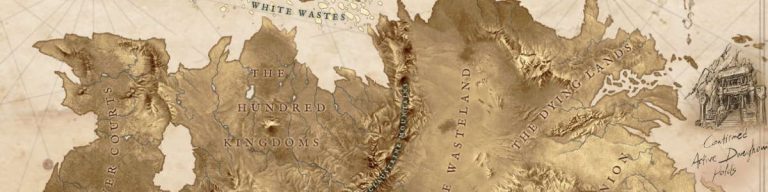
In the stricter places of the world, from the Scholae enforcers of the City States to almost all major institutions of the Kingdoms, magic is only allowed to be explored within specific avenues and to be practiced through allowed methods and to serve specific purposes. In the Cities, schools are the only sanctioned avenue to magic, meant to channel the Gift down the avenues that promote Plato’s vision, through reality bending and in service to the tekne. In the Kingdoms, even the during the days of the Empire, the Chapters are the only “acceptable” home for the Gifted; and it is no wonder that they focus on strategic application and, though not openly admitted, diplomatic or political enhancements. Even the Nords do not readily embrace “Seidhr” unless it is tied to the semi-religious practices of the Shamans or the Volva, with people who refuse to bind themselves to the moral direction of either group being ostracized or, in very extreme cases, lynched. One would think that the obvious exception to these approaches are the Sorcerer Kings, who have based their entire society on its practice study and advancement. At the same time, it is also widely understood that the Dweghom have a similar approach to this, seeing as the Gift is spread far and wide among them. However, neither is entirely true.
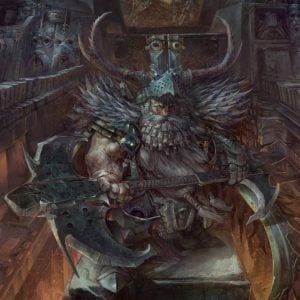
By and large, the Dweghom benefit from the effects of their natural Imbalance—and therefore their ancestor-given Gift—but only a very small number seeks to actively cultivate, wield and master this power. This is partly because, while their physical Imbalance is a given, their ability to wield it is not. Considering that wielding magic for the Dweghom can have serious, physical repercussions, it is perhaps, after all, no wonder why so few, often philosophically or even semi-religiously oriented, individuals choose to embrace it. That being said, however, the truth is that Dweghom society, by and large, is also very magical, relying on it for so many things, from the safe expansion of their Halls to their automata and working of their forges. But considering their potential, their capacity for magic, the numbers of their practitioners are extremely low.
Something similar could be said about the Sorcerer Kings. While their very society is obviously magical, those Gifted among them are even more guided down specific paths to cultivate and practice their Gift. Here, dressed in a semi-religious mantle, magic is a social aspect and even almost a… bureaucratical one. Few, very few, and usually those considered only mildly Gifted, are allowed to pursue and research in ways that do not follow the paths laid down by the four monarchs themselves and their Elemental Courts. The rest are hurled down the path of Domain Exploration, to elevate their Court as a whole, and deepen the bond of their deific monarch to their Element.
It is no wonder, therefore, that many Gifted do not wish to reveal their Gift. It is most often seen as a stigma that will rob one of whatever life they know, to be hurled down paths they never chose or even be chased out of their own villages for fear of their lives. Some succeed. Known to take out food straight from the boiling pot with bare hands or as the local horse whisperer, they are nevertheless haunted forever by weird occurrences, suffering from splitting migraines and even seeing things, while they hide (from) their Gift with success, leading normal lives. Others fail and meet abrupt ends, in the face of superstition, fanaticism or simply failure to control their own abilities. And some very few succeed. Known most often as hedge witches, these individuals learn to use their Gift through simple, everyday practices. Learning from each other, by instinct or even forbidden books, they manage to both satisfy the urges of their Gift and lead almost normal lives, masquerading as fortune tellers, potion masters, alchemists, tricksters or even hiding their craft in plain sight, in anything from cooking recipes to seaming patterns. Beyond the view of most, there is a society of gifted, who lives and moves in the shadow of the rest of the world.
Of course, it is hard for people not to notice. They most often do. But if one is useful enough, be it by advising the monarch, making healing draughts, or simply protecting a village from the predations of brigands, few care. Thus, even in this hidden, free way to practice one’s gift, one is forced to do it in a manner that is decided by others. And, as we began with a quote of a Grimoire, let us end with a quote from another.
So ends the Good and Tested Recipes of Sister Yveth, hiding, as ever, its truth in plain words:
…and that is why I always say: to be gifted with good cooking, is to be cursed.